How to Combat Frizzy Hair in the Humid Ontario Summers
How to Combat Frizzy Hair in the Humid Ontario Summers
Ontario summers bring high temperatures and humidity levels that often exceed 70 percent. This moisture in the air reacts with the hair’s protein structure, causing the cuticle to swell and lift. The result is frizz, which affects approximately 80 percent of people with curly or wavy hair and a significant number of those with straight hair. This article explains the science behind humidity-related frizz and provides specific methods to manage it, with practical advice for residents of Guelph, ON.
Key Questions About Frizz in Humid Weather
Why does hair frizz when it is humid?
Hair is made of a protein called keratin. The outer layer of each strand, the cuticle, acts like overlapping shingles. When the air holds more water vapor, that moisture penetrates the cuticle and moves into the cortex, the inner layer. This causes the hair shaft to swell and the cuticle to stand up. Swollen, rough hair reflects light unevenly, which appears as frizz and dullness.
Can frizz be permanently fixed?
No. Frizz is a physical reaction to moisture. It can be managed with the right products and techniques, but it will return when humidity levels rise. Some salon treatments, such as keratin smoothing systems, can reduce frizz for several weeks or months, but these are not permanent.
Is frizz worse for certain hair types?
Yes. Hair with a naturally curly or wavy pattern has a more irregular cuticle shape, making it easier for moisture to enter. Fine, straight hair can also frizz, but it often appears as puffiness or static rather than defined curls. Chemically treated hair, including color-treated and bleached hair, has a more porous cuticle and is more susceptible to humidity.
Does a higher price of shampoo mean better frizz control?
Not necessarily. The effectiveness of a shampoo depends on its ingredients, not its price. Look for sulfates, which are strong cleansers that can strip natural oils, and avoid them if you have frizz issues. Products labeled “sulfate-free” are generally better for maintaining moisture balance.
Understanding the Humidity Problem in Guelph
Guelph, ON, experiences a humid continental climate. Summer months, particularly July and August, often see dew points above 15°C (59°F), which is when most people notice significant frizz. Relative humidity frequently reaches 80 to 90 percent in the morning and evening. This is not a short-term weather event; it lasts for weeks, making a consistent hair care routine necessary.
The water in Guelph is also a factor. The city sources its water from groundwater wells, which means it is considered “hard” water. Hard water contains high levels of calcium and magnesium. These minerals build up on the hair shaft, making it rough and more prone to frizz. A clarifying shampoo used once every two weeks can help remove this mineral buildup.
Core Strategies for Frizz Control
Managing frizz in a humid climate requires a multi-step approach. No single product will solve the problem. The following sections break down the process into washing, conditioning, styling, and long-term treatments.
1. Adjust Your Washing Routine
Over-washing strips the hair of its natural oils, called sebum. Sebum acts as a protective barrier against moisture. When it is removed, the hair is more vulnerable to humidity. Most people in Guelph do not need to wash their hair every day. Washing every two to three days is often sufficient for those with normal to dry hair.
When you do wash, use lukewarm or cool water. Hot water lifts the cuticle further, increasing the chance of frizz. Cool water helps the cuticle lie flat. After washing, gently squeeze excess water from the hair with a microfiber towel. Do not rub the hair with a regular towel. Rubbing creates friction, which roughens the cuticle and causes breakage and frizz.
Choose a shampoo that is labeled “sulfate-free.” Sulfates, such as sodium lauryl sulfate, are detergents that create a rich lather but can be too harsh. A gentle, sulfate-free shampoo will clean the scalp without over-drying the lengths of the hair.
2. Use Deep Conditioning and Leave-In Products
Hydration is key to frizz control. Hair that is well-moisturized is less likely to absorb excess water from the air. Use a rich conditioner after every wash. Focus the conditioner on the mid-lengths and ends, not the scalp, to avoid weighing down the roots.
Once a week, replace your regular conditioner with a deep conditioning mask. These masks contain higher concentrations of emollients and humectants. Look for ingredients like shea butter, glycerin, and aloe vera. Glycerin is a humectant, which means it draws moisture from the air. In high humidity, this can be counterproductive, so use glycerin-based products sparingly during the wettest months.
After washing and conditioning, apply a leave-in conditioner. This provides a continuous layer of protection between washes. Spray it onto damp hair, focusing on the ends, and comb through with a wide-tooth comb.
3. Select the Right Styling Products
Styling products are the first line of defense against humidity. The key is to create a barrier that prevents moisture from entering the hair shaft. Look for products that contain silicones, such as dimethicone or cyclopentasiloxane. These ingredients coat the hair with a smooth, water-repellent film. They are effective but can build up, so a clarifying shampoo is necessary to remove them periodically.
For those who prefer to avoid silicones, oils like argan oil, jojoba oil, and coconut oil can be used. These oils penetrate the hair and also form a protective layer. Apply a small amount, roughly the size of a dime, to damp hair. Too much oil will make the hair look greasy.
Anti-frizz serums and creams are also available. A serum is typically silicone-based and provides a high-shine finish. A cream is lighter and better for wavy hair. Apply these products to soaking wet hair before you dry it. This locks in moisture and creates a barrier before the hair is exposed to the air.
4. Master the Drying Technique
How you dry your hair has a large impact on frizz. Air drying is not always the best option in humid weather. When hair is wet, it is in its most fragile state. If you let it air dry in 80 percent humidity, the hair will absorb moisture from the air and swell, leading to frizz. A hair dryer, used correctly, can be more effective.
Use a hair dryer with a nozzle attachment. The nozzle concentrates the airflow and directs it down the hair shaft, which helps the cuticle lay flat. Use a medium heat setting and keep the dryer moving. Hold the dryer about six inches from the hair. Finish with a cool shot of air to seal the cuticle.
If you have curly hair and prefer to air dry, use a diffuser attachment on low speed. A diffuser spreads the air over a larger area, reducing the force of the airflow. This helps maintain the curl pattern and minimizes frizz.
Long-Term Solutions and Salon Treatments
Daily product use can manage frizz, but some people want a longer-lasting solution. Several salon treatments are available that can reduce frizz for an extended period.
Keratin Smoothing Treatments
Keratin treatments work by applying a liquid keratin solution to the hair and then sealing it with a flat iron. The keratin fills in gaps in the hair cuticle, creating a smooth surface. This treatment can reduce frizz and drying time by 50 percent or more. The effects typically last three to five months, depending on hair type and how often the hair is washed.
It is important to note that some keratin treatments contain formaldehyde or formaldehyde-releasing agents. These chemicals can be harmful when inhaled during the application process. Ask your stylist about the specific formula they use and whether it is formaldehyde-free.
Professional Hair Care Consultations
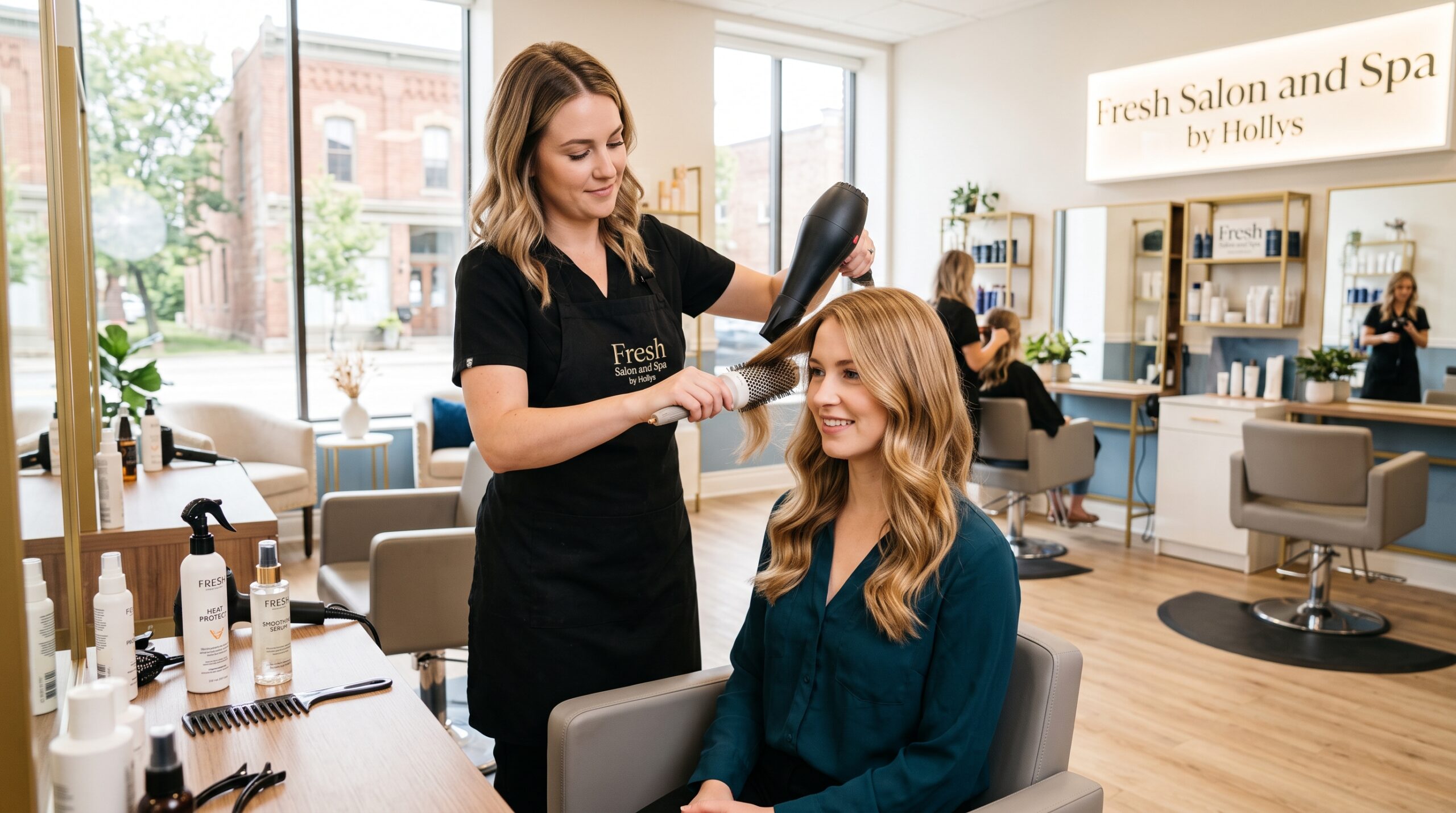
A professional stylist can assess your specific hair type and recommend a routine that fits your lifestyle. The stylists at Fresh Salon and Spa By Holly in Guelph, ON, can perform a hair analysis to determine your hair’s porosity and elasticity. This information is used to select the correct products and treatments for your needs.
Fresh Salon and Spa By Holly has been operating in Guelph since 1986. The salon offers a range of hair services, including color, cuts, and smoothing treatments. Their pricing is based on a level system, where the cost of a service depends on the experience level of the stylist. This system ranges from Entry Level to Level 4AA, giving clients options based on their budget and the complexity of the service.
Practical Advice for Daily Life in Guelph
Beyond the washing and styling routine, there are practical steps you can take to manage frizz during the summer months in Guelph.
- Protect hair from the sun. UV rays can damage the cuticle, making it more porous and prone to frizz. Wear a hat when spending extended time outdoors, or use a hair product with UV protection.
- Use a silk or satin pillowcase. Cotton pillowcases absorb moisture from the hair and cause friction. Silk and satin are smoother and help retain moisture and reduce friction while you sleep.
- Rinse with cold water after swimming. Chlorine and salt water strip the hair of moisture. A quick rinse with fresh, cool water after swimming helps remove these chemicals and prevents them from drying on the hair.
- Consider a protective hairstyle. Braids, buns, and ponytails reduce the surface area of the hair exposed to humidity. This can be a practical way to keep frizz under control on the most humid days.
Next Steps for Managing Frizz
Managing frizzy hair in a humid climate is a process of trial and error. Start by adjusting your washing routine and introducing a leave-in conditioner. If you are not seeing results, visit a professional for a consultation. A stylist can identify issues like hard water buildup or product overload that you might not be able to see.
For residents of Guelph, ON, dealing with summer humidity is a seasonal challenge. With the right products, techniques, and occasional professional treatments, it is possible to keep hair smooth and manageable even when the dew point rises. Book a consultation at a local salon to get a personalized plan for your hair type.












Post Comment